Kota Painting: A Regal Legacy of Rajasthan’s Artistic Heritage
Get link
Facebook
X
Pinterest
Email
Other Apps
Rediscovering the Grace of Kota Style in Nathdwara Pichwai Paintings
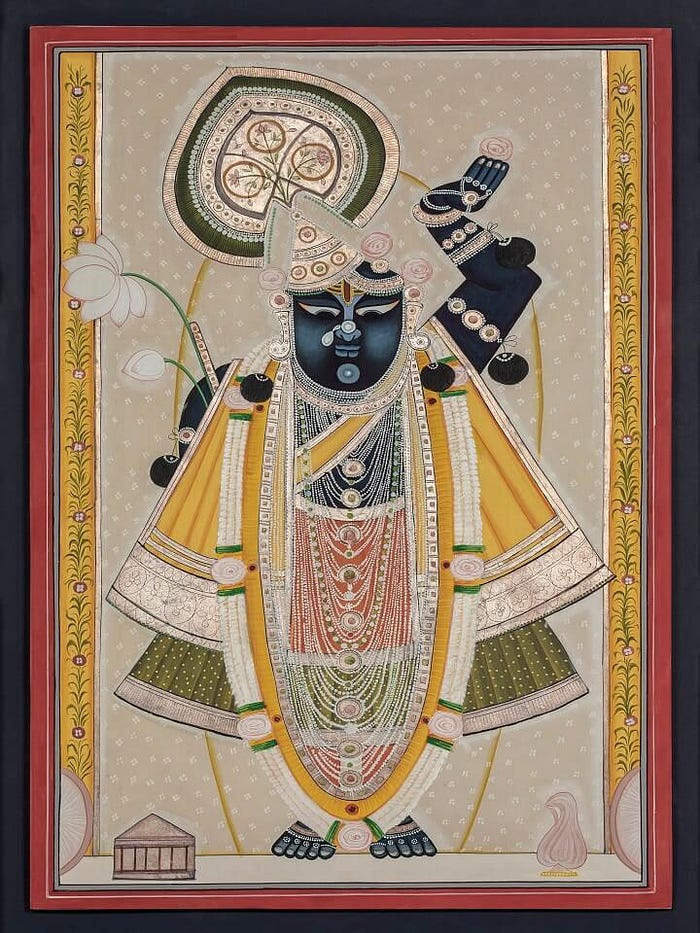
In the vast tapestry of Indian devotional art,Pichwai paintingshold a special place, especially those originating from Nathdwara, Rajasthan. These sacred artworks — traditionally hung behind the idol of Lord Shrinathji — are deeply embedded in the rituals of the Pushtimarg sect. While Nathdwara is celebrated as the spiritual and artistic nucleus of this tradition, it has been significantly influenced by various regional painting styles. Among these, theKota Paintingstyle stands out for its elegance, subtlety, and visual grace.
The Stylistic Influence of Kota on Nathdwara Pichwais
Kota, a princely state of Rajasthan, is second only to Nathdwara in its number of havelis (Pushtimarg temples). Naturally, this region became a significant contributor to the evolution ofKota Paintingwithin the Pichwai tradition. By the 19th century, Nathdwara Pichwais began to reflect a pronounced Kota influence, moving away from bold, high-contrast compositions toward a more refined visual language.
This period saw a noticeable transformation in the portrayal of Lord Shrinathji. Earlier depictions featured a more stylized and robust form, often painted in dark indigo. With the adoption ofKota Paintingaesthetics, Shrinathji’s form became more delicate — short and plump with a round, broad face and large, expressive eyes. His skin tone was often rendered in ultramarine blue, a departure from the traditional indigo, echoing a more youthful and serene divine presence.
Color, Composition, and Mood
A hallmark ofKota Paintingis the use of pastel shades instead of the typically bright palette of traditional Nathdwara works. The colors are softer, evoking a sense of calm and spirituality. The figures — whether of Krishna, gopis, or sacred cows — are drawn with graceful posture and subtle expression, enriching the emotional narrative of the artwork.
This muted, elegant aesthetic was not just a visual change; it reflected a shift in the way divine love and devotion were communicated through art. The mood became meditative, and the overall compositions felt more balanced and harmonious.
PTB’s Contemporary Language of Kota Pichwais
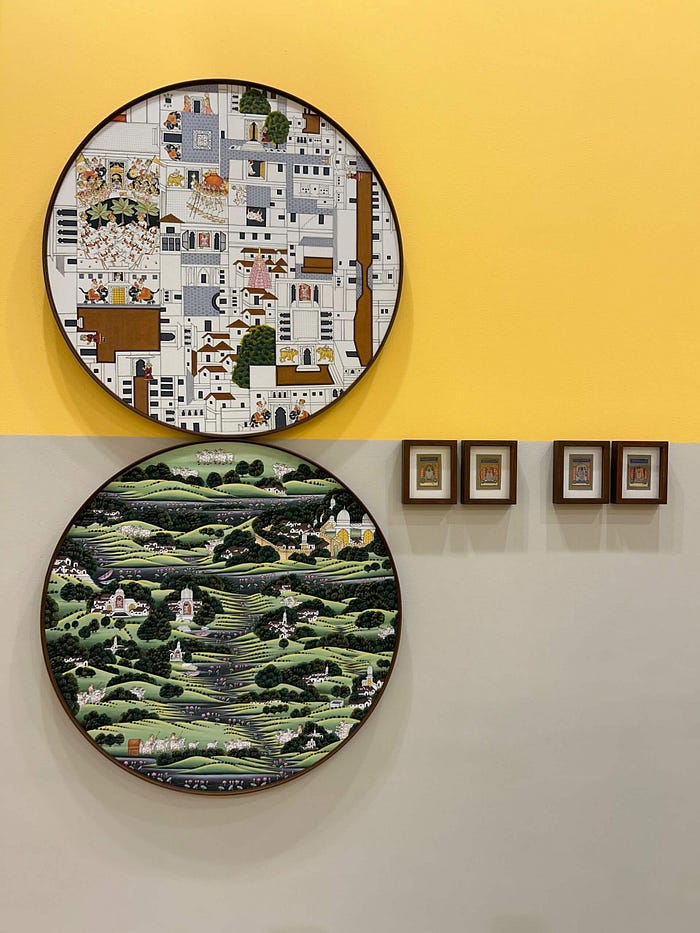
Pichwai Tradition and Beyond(PTB)has played a crucial role in reviving and reinterpreting theKota Paintingstyle for the modern world. Recognizing the minimalist essence of these compositions, PTB has curated series that group and display Kota-influenced Pichwais in a contemporary context. The studio’s approach brings new relevance to this historic style while maintaining its spiritual and artistic integrity.
By translating these works onto various formats — from miniature paintings to large-scale cloth backdrops — PTB offers audiences a fresh perspective on the timeless beauty of Pichwai art. These reinterpretations appeal not only to traditional art collectors but also to modern aesthetes seeking refined devotional art with cultural depth.
Conclusion
The integration of Kota Painting into Nathdwara’s Pichwai tradition is a beautiful example of how regional influences enrich classical Indian art. Through its minimalist charm, pastel color schemes, and graceful figures, Kota’s artistic essence continues to inspire. With visionary efforts by platforms like PTB, this nuanced tradition is not just preserved — but celebrated and transformed for the future.
Temple Wall Painting Designs have been part of India’s background for hundreds of years, turning temple interiors into colourful spaces filled with faith and artistry. These art work depict gods, goddesses, nature, and mythological tales that encourage devotion amongst worshippers. Known for his or her brilliant hues and tricky information, they transform regular partitions into visual narratives of subculture and spirituality. History of Temple Wall Painting The subculture of Temple Wall Painting Designs dates returned to ancient instances while artists decorated temple walls to honor deities and narrate sacred epics. Scenes from the Ramayana, Mahabharata, and Puranas had been regularly featured, making the walls a medium for storytelling. Over time, each place of India developed its particular fashion, together with Kerala work of art and Rajasthan’s Pichwai artwork, including diversity to this traditional shape. Artistic Features of Temple Wall Painting Designs The splendor...
When Temple Walls Speak Through Paintings There’s something magical about stepping into an old Indian temple. The smell of incense, faint sound of chants… and then, the walls. Covered in colors, gods, flowers, and stories. That’s when I started noticing something I had never paid much attention to before — the temple painting design . They aren’t just decoration. They are history, devotion, and culture — all rolled into one. A Glimpse Into Temple Painting Design So, what exactly are these temple painting designs ? Simply put, they are traditional artworks painted directly on the walls or panels inside temples. But they’re more than that. Each region in India has its own style. Kerala has mural paintings with soft colors and rounded forms. Rajasthan has bold figures and storytelling scenes. Tamil Nadu has paintings that almost feel like ancient cinema frames. But one thing remains the same — these temple painting designs were never just for beauty. They told stories. Th...
What Makes Mughal Art Paintings So Fascinating? So, I was flipping through an old history book a few months back (not something I usually do, honestly), and one image caught my eye — a painting of a Mughal emperor sitting in a garden, with intricate patterns, detailed clothes, and soft, faded colors. It looked more like something you'd see in a museum than a textbook. That’s how I first got curious about Mughal Art Paintings . And once I started digging deeper… I was hooked. It’s Art, But Also a Window Into the Past There’s something really personal about Mughal Art Paintings . They're not just royal portraits or fancy scenery. They actually show us what life looked like centuries ago — how people dressed, what they ate, how they celebrated, and even what animals roamed the royal gardens. A lot of these paintings were made for emperors like Akbar, Jahangir, and Shah Jahan. Each had his own taste and encouraged artists to bring their visions to life. Some works were seriou...



Comments
Post a Comment